
Define AI agent boundaries before you build
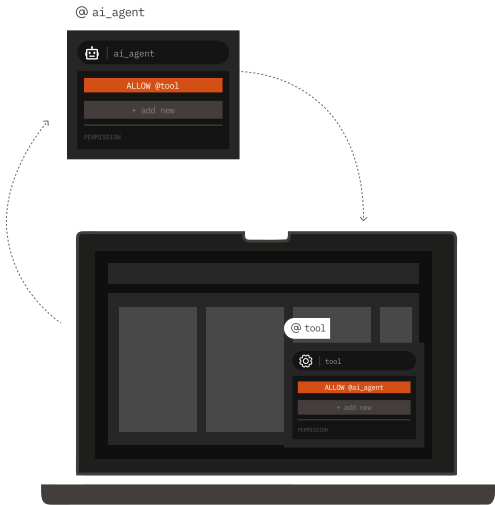
AI agents need access to tools, data, applications, and internal systems. Give every agent, tool, service, and data source its own cryptographic identity, bounded authority, and end-to-end encrypted communication with post quantum protection, without exposing inbound access to protected infrastructure.
// AI agents turn access into action
Traditional applications usually follow defined workflows. AI agents interpret instructions, retrieve context, call tools, query databases, invoke APIs, and act across systems.
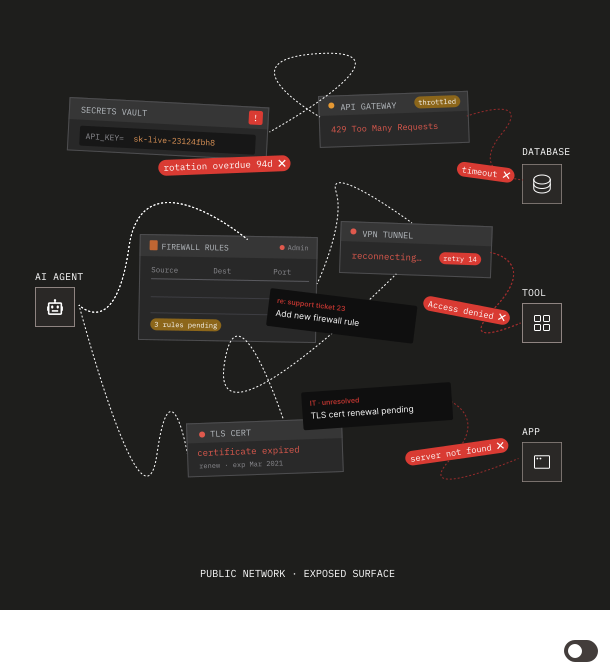
That creates new security challenges: proving which agent is acting, limiting what it can reach as workflows change or drift, governing tool and data access, and preventing customer or third-party agents from using inherited user credentials as a path into applications.
When agents inherit shared credentials or broad network reach, prompt injection and workflow manipulation can become authenticated behavior. Atsign changes the model by verifying identity and enforcing connection-level access before communication begins.
// How Atsign secures AI agent access
Atsign AI Architect turns architectural design into structured guidance for AI-assisted development, helping teams generate secure-by-design application code on the Atsign Platform.
Atsign gives AI agents, tools, services, databases, and applications verifiable identities before communication begins. Instead of relying on shared credentials, inherited user access, exposed APIs, or broad network permissions, each agent connection is tied to a known identity and limited to the systems, tools, data, and actions it is authorized to use.

Give every agent a verifiable identity
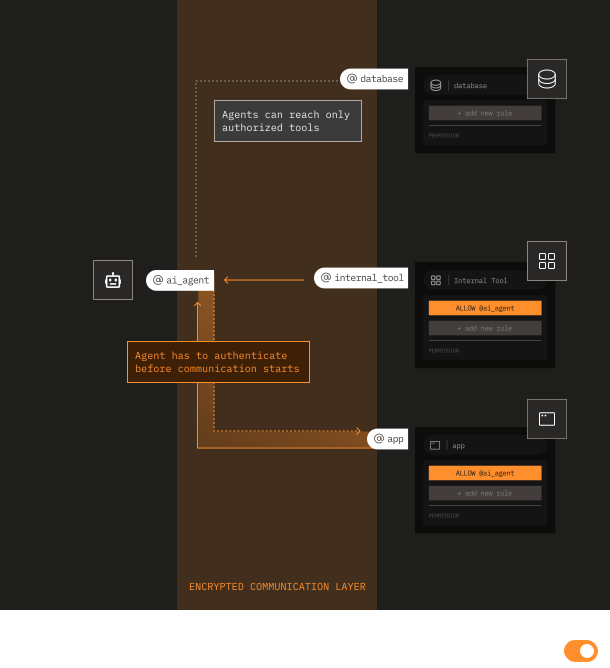
AI agents, LLM wrappers, orchestrators, tools, services, databases, and applications authenticate with their own Atsigns before communication begins.

Bound what each agent can reach and do
Agents can reach only the tools, systems, and data sources they are authorized to use. Unauthorized tools and databases remain unreachable, even if the agent workflow is manipulated or drifts from its intended path.

Keep protected systems hidden
Agents communicate with authorized systems through outbound-only paths, without opening inbound ports or exposing internal services to public discovery.

Encrypt agent-to-system communication
Data exchanged between authorized agents, tools, applications, and systems is encrypted end-to-end using post-quantum cryptography, with keys controlled by the communicating parties.

Support governance and accountability
Agent access can be tied to verified identity, scoped authority, and attributable communication paths, helping teams review who or what accessed which systems, tools, and data.
// Traditional AI access vs. Atsign-secured AI
The difference is not just how agents are monitored. It is whether unauthorized communication is possible in the first place.
Shared or inherited credentials
Broad API or network permissions
Guardrails after access is possible
Exposed APIs, gateways, firewall exceptions
API keys, service accounts, token rotation
Runtime monitoring around agent behavior
Unique cryptographic identity
Scoped access to approved tools and data
Unauthorized tools are unreachable
No exposed inbound access
Identity-bound, post-quantum-protected encrypted communication
Connection-level control before communication
// Built for MCP, tools, agents, and enterprise data
MCP makes it easier for AI agents to connect to tools, databases, applications, and context sources. That also expands the risk surface. If agent-to-tool communication depends on shared credentials, exposed endpoints, or broad access, prompt injection and workflow manipulation can become a path to sensitive systems and data.
Atsign helps secure MCP-based workflows by creating a cryptographic chain of trust around agent communication. Agents, tools, services, and data sources authenticate with verifiable identities before communication begins. Every tool call, database query, or context retrieval can be tied back to the initiating agent, and unauthorized tools or data sources remain unreachable.
Atsign does not rely on monitoring agent behavior after access is already available. It helps teams define which tools, systems, and data sources an agent can reach before the connection exists.
.svg)
// Secure new agent workflows. Protect the systems they reach.
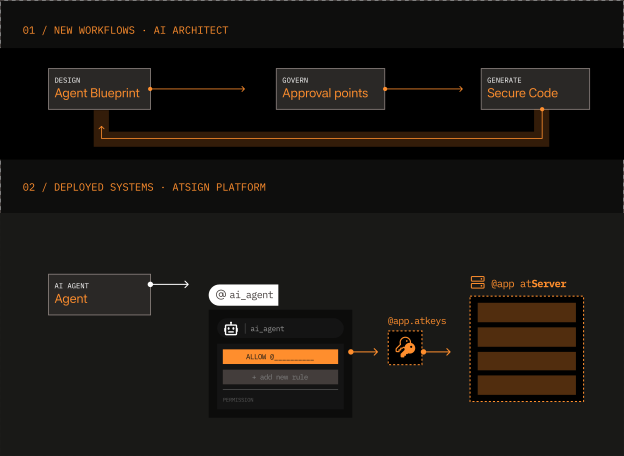
Atsign supports both sides of AI agent adoption: building new agent workflows with secure-by-design architecture from the start, and protecting the existing systems those agents need to reach.
For new workflows, Atsign AI Architect helps teams define agents, tools, data sources, approval points, access boundaries, and communication paths before code is generated. AI coding assistants can then use the approved blueprint as structured context for implementation.
For deployed systems, the Atsign Platform provides identity-first, encrypted communication and connection-level controls so agents can reach authorized servers, databases, APIs, MCP servers, and internal applications without opening inbound ports or redesigning the network.
// Reduce Agentic security TCO by design for a safer runtime
Atsign helps teams reduce security overhead at both stages of AI agent adoption.
During development, teams can define agent identity, authority, tool access, data access, approval points, and communication paths before code is generated, reducing late-stage security retrofits.
At runtime, Atsign replaces shared service accounts and API keys with verifiable identities and connection-level controls. With built-in support for hardware acceleration—achieving up to 88x throughput gains on Intel platforms using AES-NI—strong cryptographic security operates as a default runtime control without creating performance bottlenecks
The result: less time stitching security around agent workflows after the fact, and a clearer path to moving AI systems safely toward production.
// Create your first secure agent workflow
Bring your agent prompts, MCP servers, tool calls, and enterprise data flows. Use Atsign AI Architect to define agent boundaries before you write code, or deploy the Atsign Platform to secure existing connections—replacing shared credentials and exposed ports with verifiable identity and bounded authority.


