
Secure critical infrastructure without exposing operational assets
Keep OT, field systems, operational applications, and AI-enabled workflows reachable to authorized people and systems without making them publicly reachable.
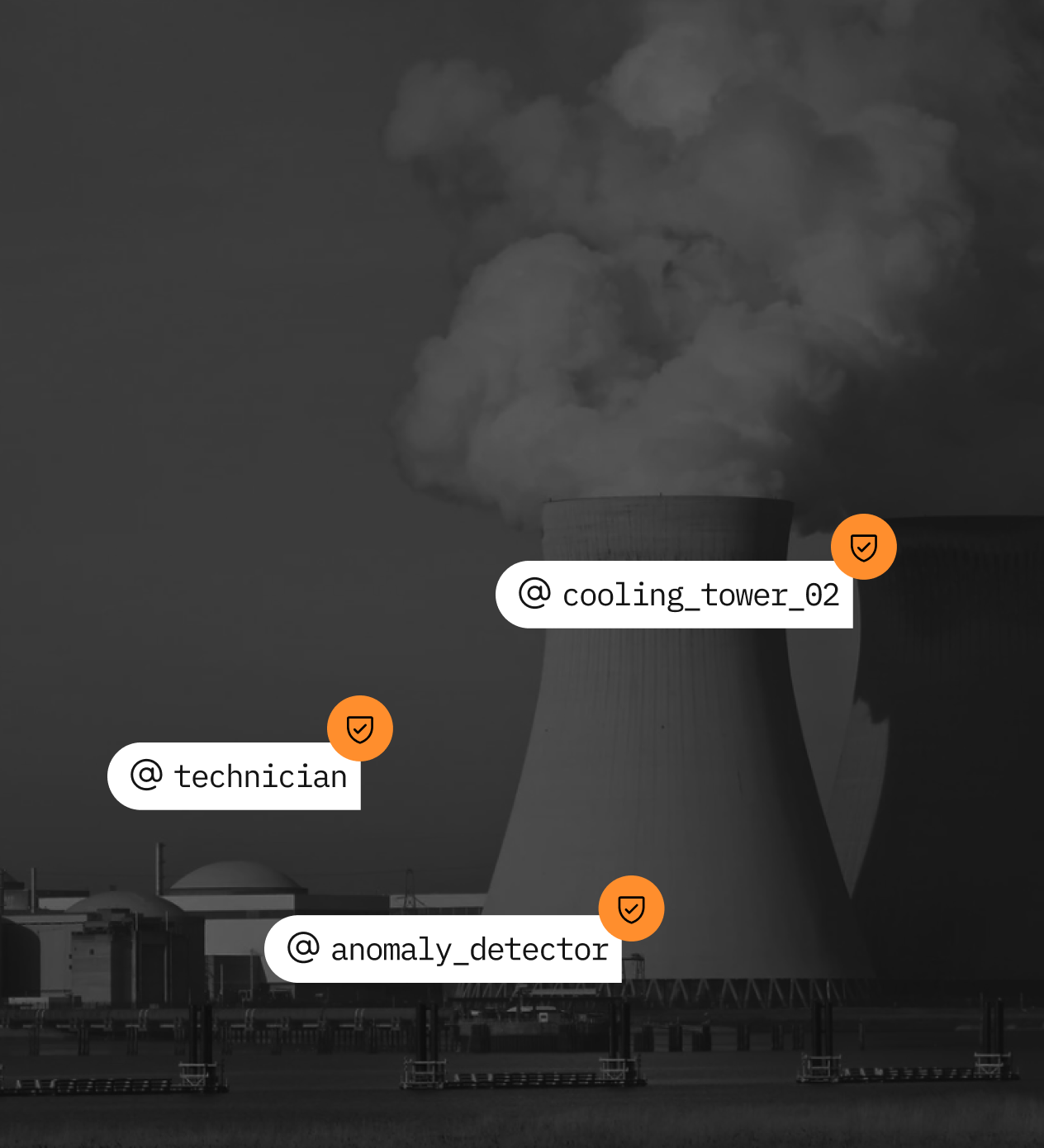
// Built for critical infrastructure operations
Atsign helps teams operate, maintain, and modernize critical infrastructure environments with verified identity, end-to-end encryption, and no open inbound access.

Energy and utilities
Operate substations, generation sites, renewable assets, pipelines, and grid-edge systems without exposing remote-management services.

Transportation infrastructure
Secure communication with roadside systems, rail infrastructure, ports, terminals, depots, and field equipment across cellular and independently managed networks.

Communications infrastructure
Protect management access, applications, and machine communication across distributed network infrastructure without exposing management services.

Water and wastewater
Connect pump stations, treatment facilities, field gateways, and specialist contractors without public endpoints or repeated local firewall changes.

Critical manufacturing
Give OEMs, integrators, applications, and AI systems controlled access to production equipment without granting broad access to plant networks.
Across every sector
Connect assets across cellular, partner-managed, customer-managed, and limited-connectivity networks without static IPs or open inbound ports.
// Four ways Atsign secures critical infrastructure operations

Operate remote assets without making them publicly reachable
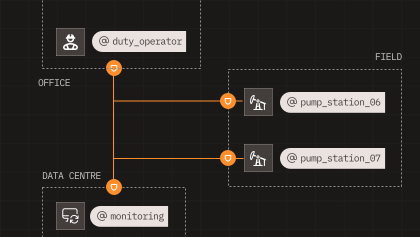
Critical-infrastructure teams need operators, applications, and control centers to reach substations, pump stations, treatment facilities, transportation systems, remote plants, and field infrastructure across distributed networks. Atsign enables authorized communication through verified identity, end-to-end encryption, and no exposed inbound access, with access limited to the specific system or resource required.
Outcome
Remote operations continue without making sensitive operational assets publicly reachable or dependent on repeated firewall and network changes.

Give vendors access to the equipment, not the network
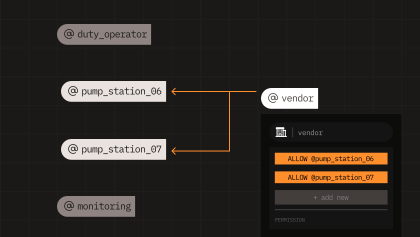
Utilities, manufacturers, transportation operators, and other infrastructure providers rely on OEMs, integrators, and specialist contractors to maintain operational systems. Atsign ties each connection to the verified identity of a person, application, or service and limits access to the specific authorized resource, without broad network reach, shared accounts, or always-on connectivity.
Outcome
Vendors can maintain the systems they support without gaining unnecessary access to adjacent operational infrastructure.

Secure machine-to-machine and operational communication
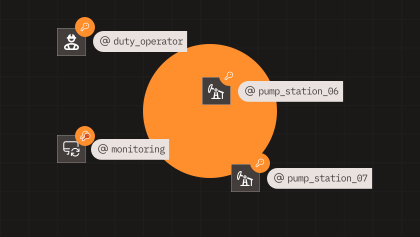
Banks and insurers depend on fintech partners, BaaS providers, institutional clients, branches, reinsurers, service providers, and external operators. Atsign enables each partner to reach only the service it is authorized to use without open inbound ports, brittle VPNs, broad network access, or endless firewall projects. Partner onboarding becomes an identity and authority decision instead of a network reconfiguration exercise.
Outcome
Operational communication becomes attributable, encrypted, and limited to explicitly authorized participants.

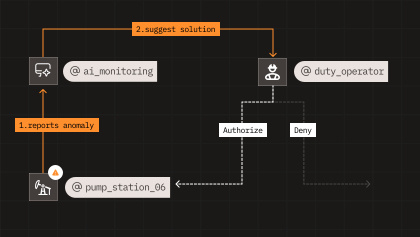
Govern AI agents operating near physical systems
As AI models and agents are applied to diagnostics, predictive maintenance, inspection, optimization, telemetry analysis, and operational decision support, teams need clear boundaries before those systems interact with physical operations. Atsign enables teams to define each agent's identity, authority, data access, tool access, communication paths, and human approval requirements as part of the operational workflow.
Outcome
AI agents can support operational processes with clearly bounded access, attributable actions, and human approval where required.
// Reduce the cost of securing distributed operations
Critical infrastructure security costs rise when every remote asset, contractor path, operational application, and field connection requires VPNs, jump hosts, static IPs, firewall exceptions, and repeated network-change projects.
Atsign helps reduce that overhead by moving access control to verified identity, bounded authority, encrypted communication, and no exposed inbound access. Teams can keep remote assets, vendor access paths, machine-to-machine flows, and AI-enabled workflows reachable to authorized participants without rebuilding the network around each use case.
// Four operational flows
Zero Exposure Architecture: Across every operational flow, all endpoints connect via outbound-initiated sessions only. Neither end opens exposed inbound ports, keeping your field devices, support tools, and applications entirely invisible to internet port scans.
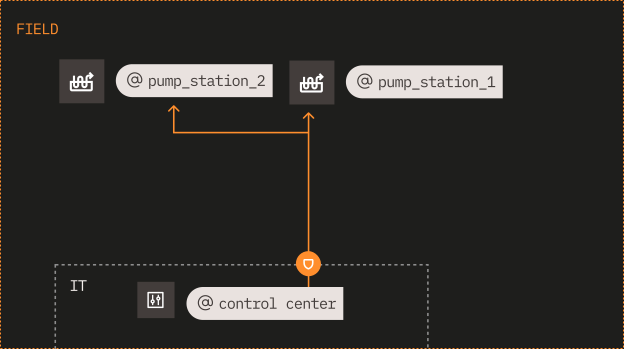
Flow 1: Routine Monitoring & Telemetry
Edge devices like @pump_station_1 stream telemetry directly to @control_center. Every payload is end-to-end encrypted and delivered only after both Atsigns verify mutual identity and check explicit authority.
Flow 2: Authenticated Remote Access
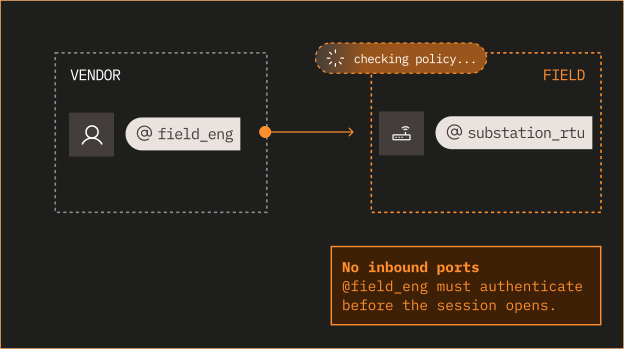
When @field_eng connects to a remote asset like @substation_rtu, the session opens only after @field_eng authenticates and system policies explicitly authorize access. The entire exchange is end-to-end encrypted for secure, direct remote management.
Flow 3: Temporary Contractor Access
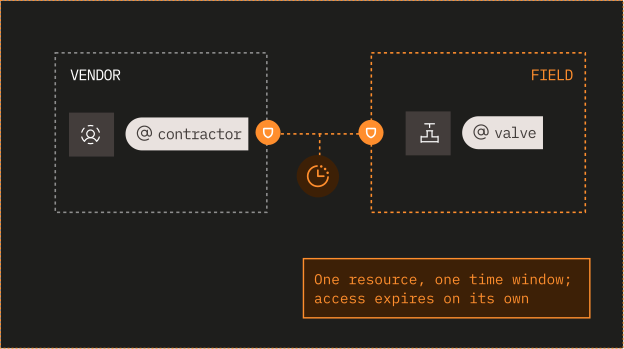
When @contractor needs access to @valve, authority is granted for one resource and one designated time window. The session is end-to-end encrypted, and access expires automatically on its own to prevent lateral movement or lingering exposure.
Flow 4: Automated Application & AI Integration
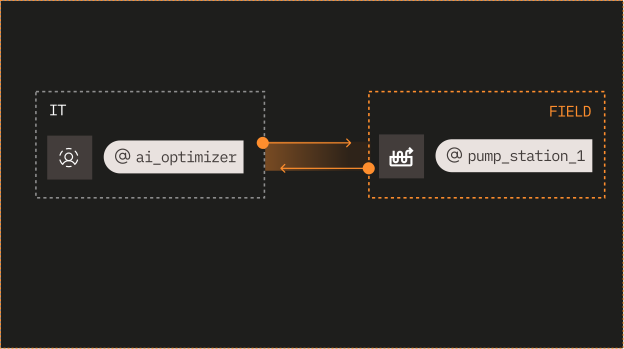
When an automated service like @ai_optimizer exchanges data with infrastructure like @pump_station_1, both ends prove identity first before any session opens. Every payload is sealed end-to-end and strictly bound by explicit authority to enable secure machine-to-machine automation.
// Protect what is running. Build what comes next
Protect existing operational systems
NoPorts secures connectivity to deployed controllers, gateways, servers, field systems, remote infrastructure, management services, and operational applications, either directly or through an Atsign-enabled gateway, without open inbound ports or major network rearchitecture.
Authorized users, applications, and systems connect through cryptographic identity and outbound-initiated communication across remote, cellular, contractor, and independently managed environments.
NoPorts helps infrastructure teams:
Proven on industrial edge hardware: NoPorts runs on industrial edge infrastructure, including Nokia SR Linux and Digi International IX40 industrial cellular routers, enabling secure Industry 4.0 deployments without opening inbound ports or redesigning local networks.
Explore NoPortsBuild operational applications and AI workflows secure by design
Atsign AI Architect helps teams use a secure-by-design, spec-driven workflow to define system identities, application and AI-agent authority, policies, APIs, data flows, human approval points, and communication paths before code is generated.NoPorts secures connectivity to servers, databases, branch systems, internal tools, partner environments, and operational infrastructure without open inbound ports or major network rearchitecture.
The approved blueprint becomes structured context for AI coding assistants, helping teams build security and governance in from day one, reduce retrofit work, and define what every application, device, service, and AI agent can access and do.Authorized users, applications, and systems connect through cryptographic identity and outbound-initiated communication while protected services remain undiscoverable to unauthenticated scanners.
AI Architect helps teams:
// Prove the architecture in your environment
Start with one remote asset, vendor-access path, machine-to-machine flow, operational API, or governed AI workflow. Validate secure communication across operational, contractor, cloud, and field environments without exposed inbound services.


